The FAS Team Built Their Own Co-Working Structure
When the FAS team began onboarding, they brought the whole team in from the start.
Everyone whose workflow would need to change knew it going in. Storytelling, data structure, reporting cadence — all of it was on the table. Staff attended onboarding sessions, rewatched training recordings, and built familiarity incrementally rather than on a deadline.
As formal onboarding wrapped, the team adapted a remote co-working model their institution already used for general work in a low-pressure way. This allowed each team member to learn and ask questions of each other in real time.
That model has since evolved into standing Friday office hours, built around show-and-tell, suited to a primarily remote team, and open to whoever needs it that week. Having this time on the calendar consistently has been significant.
From Survey to Deployed Reports
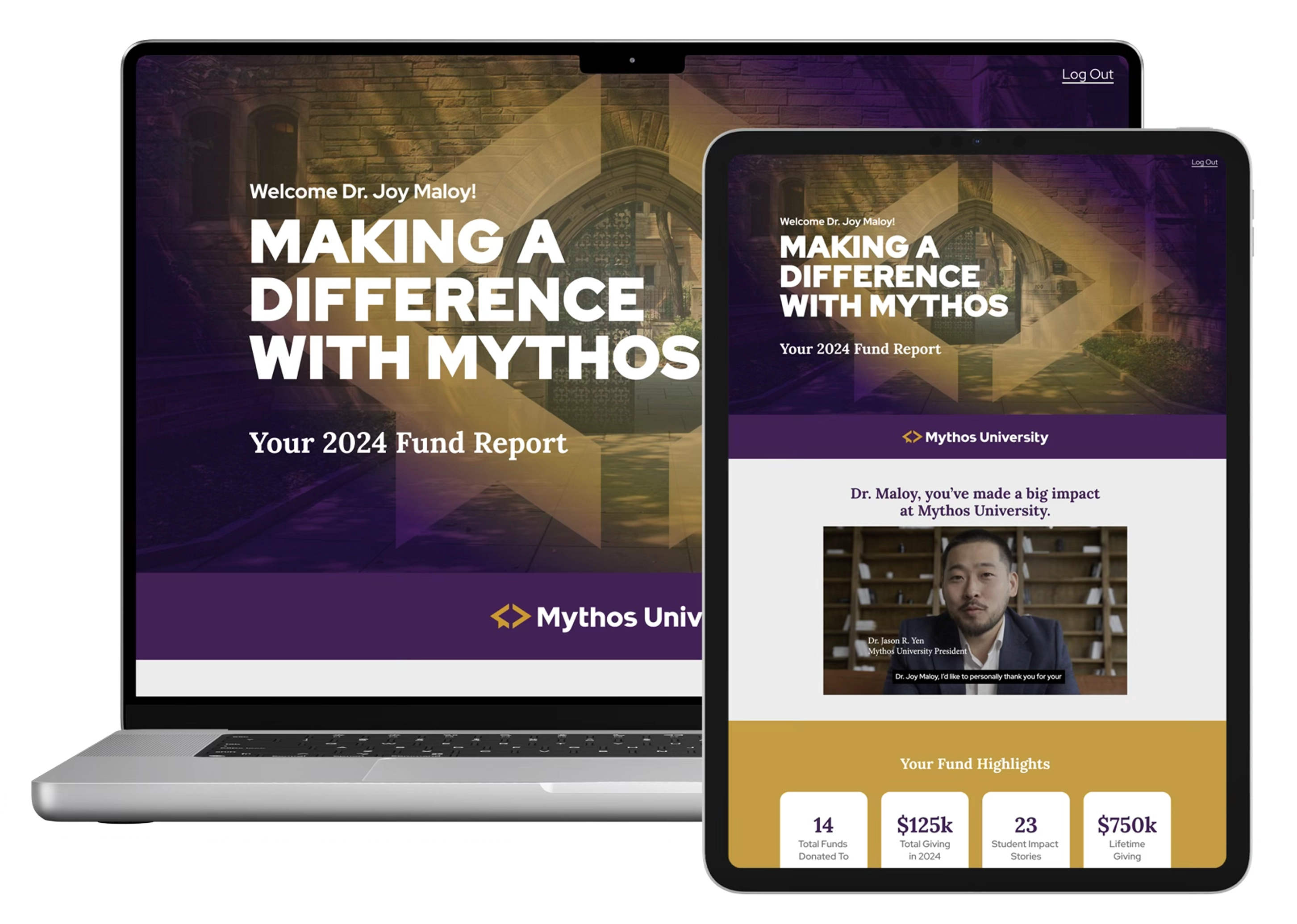
The FAS team's highest-volume programs—undergraduate scholarships and graduate fellowships—served as the foundation for the first implementation cycle. The volume and complexity made them the logical starting point. The pace at which the team moved made the outcome worth noting.
"We were onboarding at just about the time when these reports would be designed in our traditional way and going out. It was very clear right from the start that using the dynamic fund blocks in Mythos Sites would be the way to make these programs so much more efficient to report on."—Jeanne Ingram, Sr. Associate Director, Stewardship Reporting, Alumni Affairs & Development, Harvard FAS
The team started with a smart tactical plan:
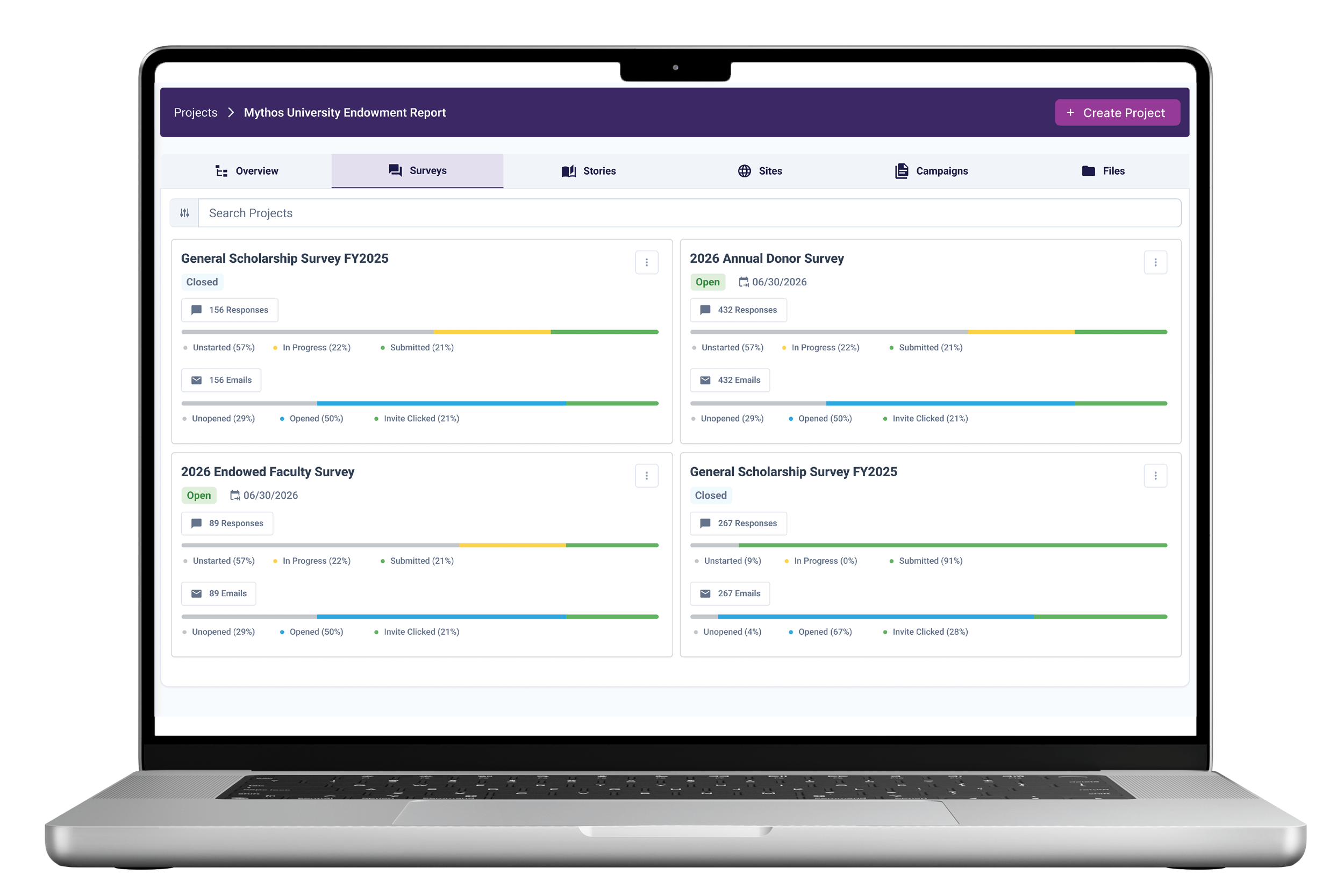
- use a Mythos Survey to collect demographic and directory information from 2,000 undergraduate beneficiaries
- build fund block templates to match the survey questions
- iterate on the design and content started flowing in
The fellowship program followed a similar architecture. For donors with both scholarship and fellowship funds, the team built a simple landing page with navigation to each. This approach gave those donors a more coherent, connected experience from a single entry point.
It was a compressed timeline for a new platform, a new workflow, and a new team. It was also a proof of concept for what's possible when implementation is treated as a design problem, not just an administrative one.
“What do we want the donor experience to be two and three years down the line? Because how we set our data up now is going to inform what happens when they log into that portal in 2028.”—Christopher M. Rosol, Senior Associate Director, FAS Operations, Harvard FAS
Looking Ahead to Year Two
The infrastructure the Harvard FAS team has now reflects the decisions they made before the first report ever went out. The co-working structures, volume program templates, and data architecture decisions made in year one are the foundation for what comes next.
The Harvard FAS team leaves year one with expanded scope and a clearer direction for year two, including:
- The FAS narrative reporting team is in active deployment—five writers managing complex, multi-fund donor portfolios.
- A professorships program that has historically been handled on a bespoke, case-by-case basis throughout the year is now being rethought for scaled delivery, with reports planned for February.