Most donor relations teams onboard Mythos with a full planning cycle ahead of them.
The RIT team didn't have that luxury. Renee Mattice arrived at Rochester Institute of Technology in November 2024 as Senior Director of Donor Relations & Stewardship with a reporting cycle already in motion, a team still forming, and data that wasn't ready.
"I probably panicked a little bit in the beginning, thinking I'm not sure how we're ever going to get this out. We actually hit the pause button because we weren't ready from a data standpoint," Renee said.
A common instinct in this situation is to just push forward and get reports out to meet the deadline. The RIT team took a different approach.
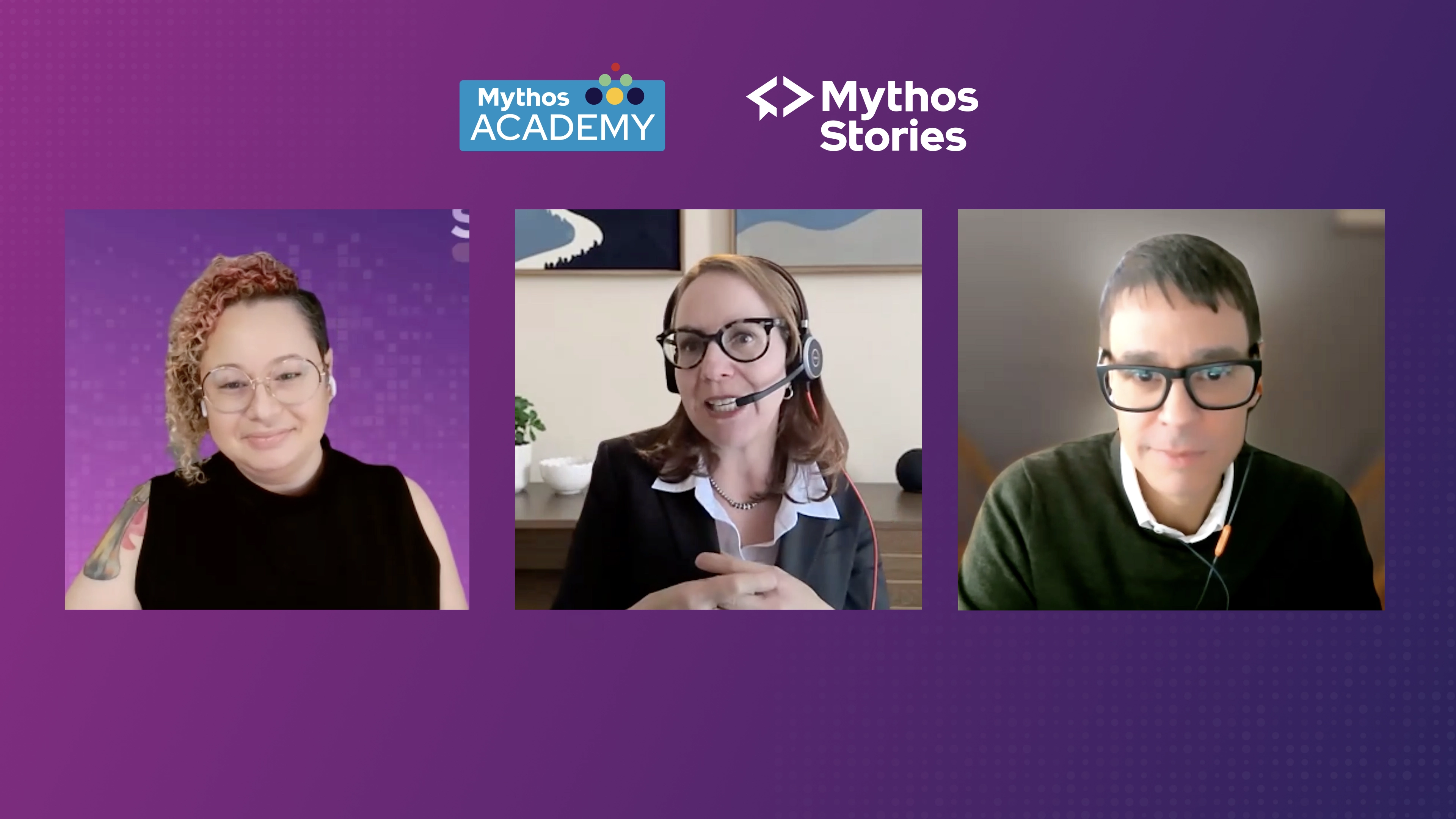
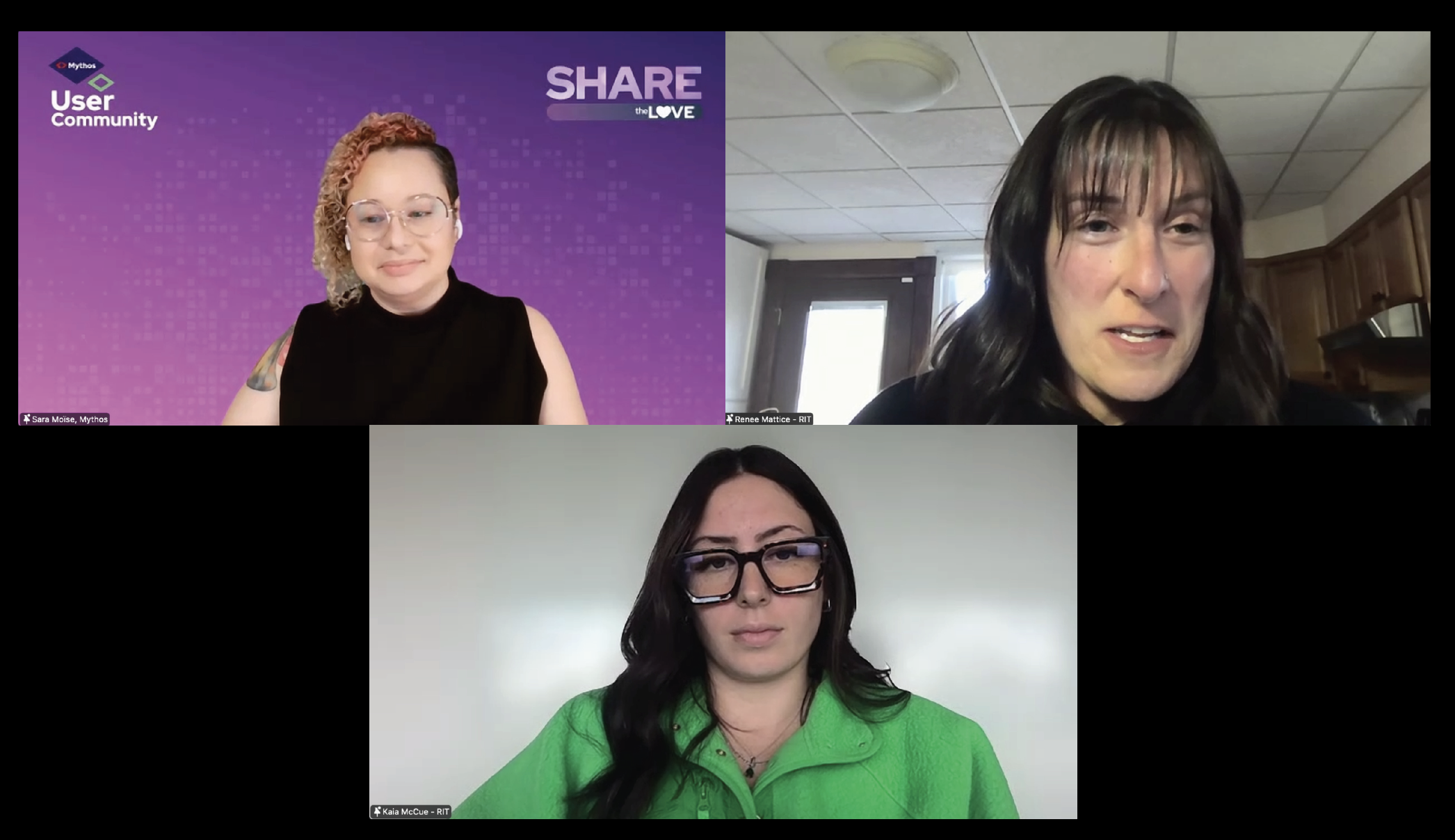
Watch Sara Moïse, Mythos Chief Stewardship Advocate, chat with the RIT donor relations and stewardship team about their first year.
Starting With Clarity, Not Speed
The Mythos Studio team helped RIT recalibrate and create a plan. Rather than attempting a full rollout, the RIT team narrowed their first-year scope to a targeted set of endowed scholarships and current use funds.
Clean data and a clear workflow at the start removes incremental problems downstream because every report cycle that follows benefits from decisions made in the first one.
From there, they came to Mythos HQ for an intensive two-day planning session:
• Day One: Focus on reflection and strategic planning
• Day Two: Focus on execution, including data preparation strategies, print template design, site design priorities.
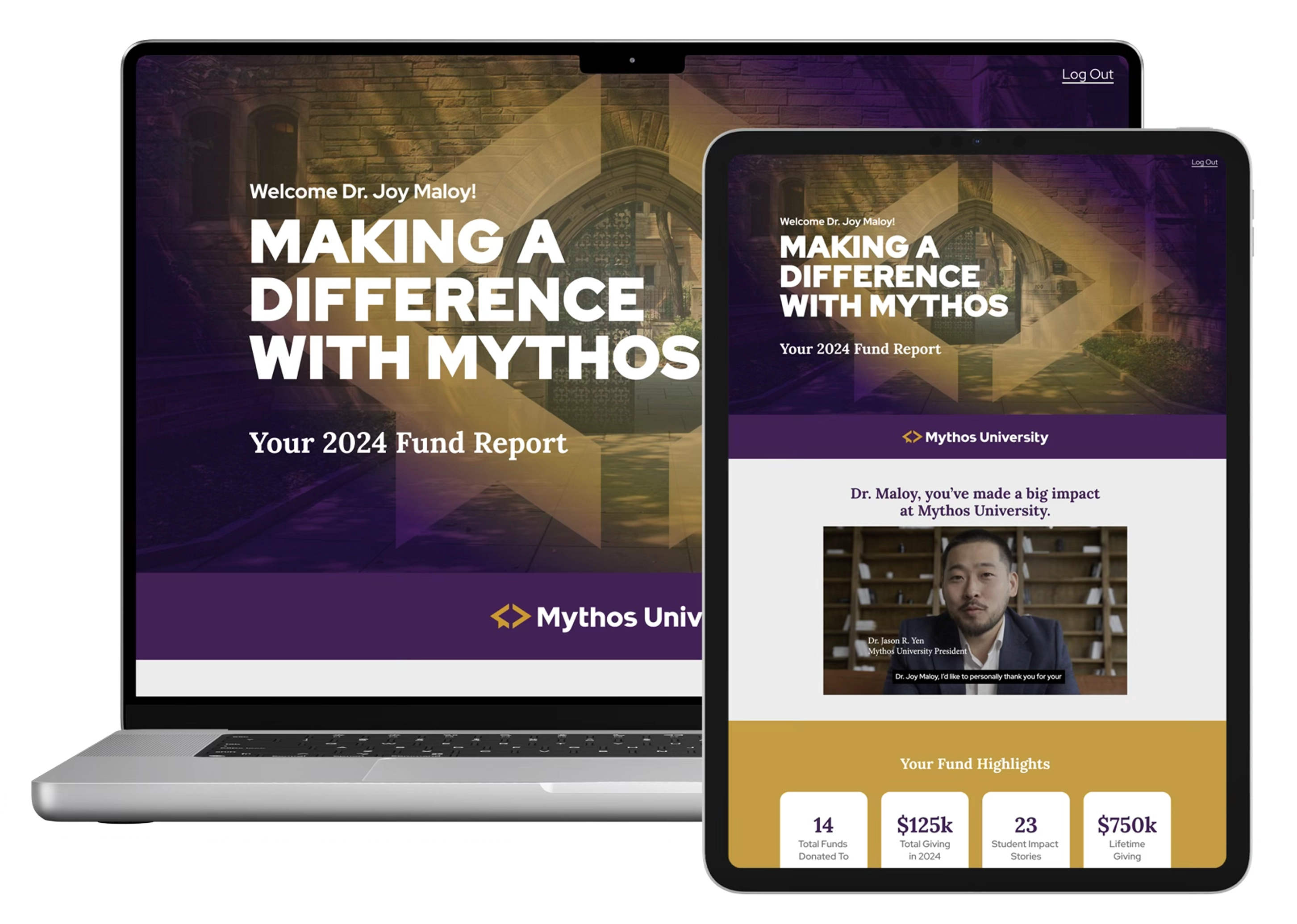
By the end, the RIT team had clarity, momentum, and a partnership framework for the next 18 months. Today, they're working on custom designs and polished sites to showcase impact through more avenues: endowment reports, of course, but broad-based reports for annual giving through recognition and giving societies, too.
The Challenges Are Universal. The Support Makes the Difference.
One of the harder parts of building a new program is not knowing whether the obstacles you're hitting are specific to your institution or common to the work itself. For the RIT team, that uncertainty added weight to an already demanding first year.
What became clear during the intensive sessions: the data challenges, the CRM inconsistencies, the gaps in records. Every team encounters these.
Once a team recognizes these challenges aren't unique to them, something shifts. The energy that was going toward troubleshooting whether something was broken redirects toward building the foundation correctly.
"There's no way that everyone has this issue..." Renee and the team asked during the sessions. "...and when we stepped into this, what we really realized is that actually everybody has these challenges. So the whole ride back from DC, we were… ‘we could do this… we could do that.’ It felt like we could do it and not limited by our resources,” Renee said.
Year Two Asks a Different Question
The RIT team is heading into their second full planning cycle with a complete team, expanded scope, and a CRM migration underway, which is being built with the data architecture to support Mythos from the start, not retrofitted later.
The operational progress is real. But the more significant shift is in the question the RIT team is asking now.
"Don't short-set your expectations," Renee said. "Come into it with a very open mind for what it can be. Come into it thinking: what can we do? What could this be?"
That's a very different question than the one most teams are asking.