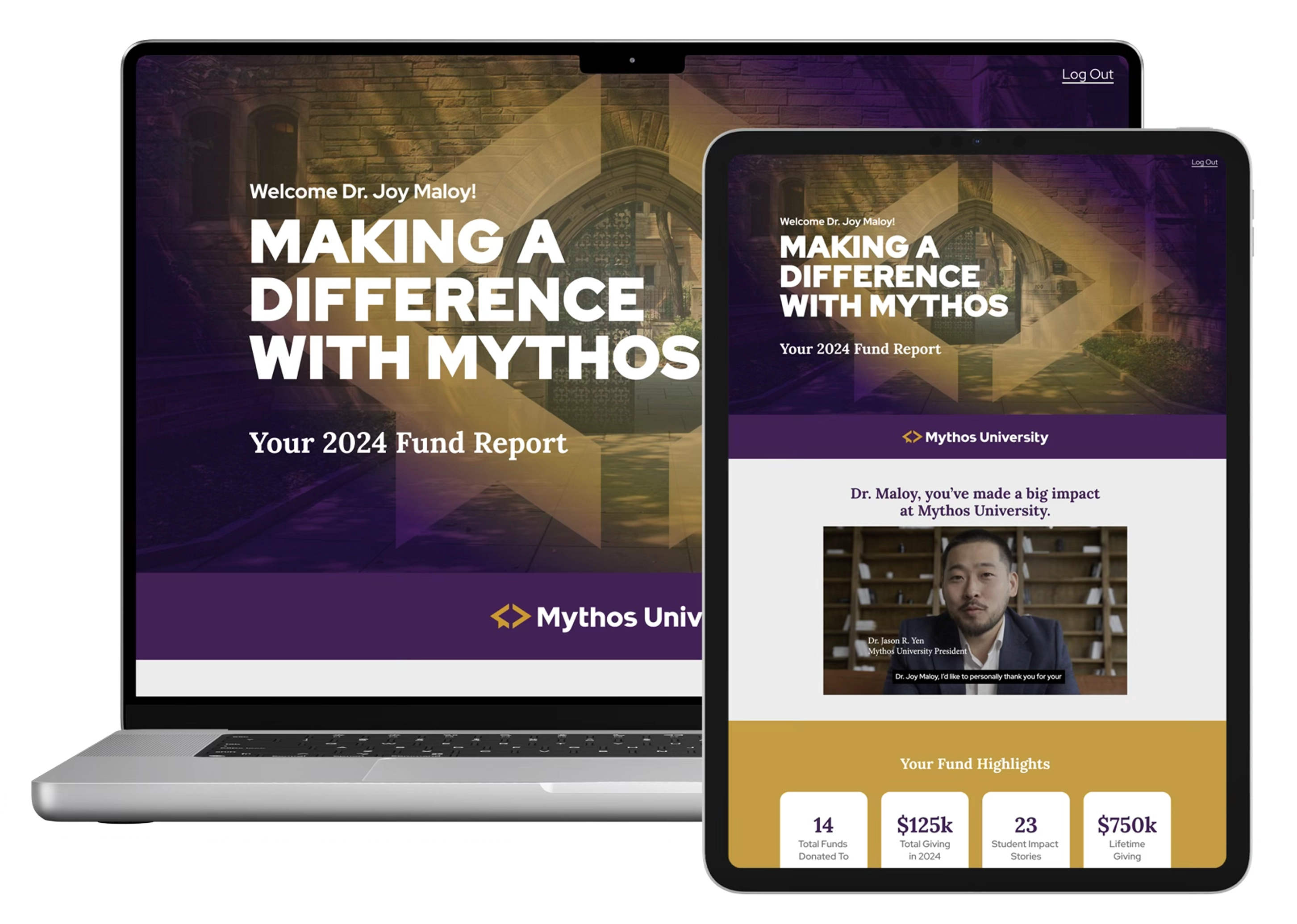
Our user community sets the Mythos roadmap. That means Mythos is packed with features that create efficiencies and help advancement, donor relations, and stewardship teams make highly personalized print, PDF, and web-based donor communications.
There's incredible potential with the platform so many of our users start by tackling just a few features in their first year, with a focus on replicating their current manual (and many times, non-digital) donor reporting and communications processes with Mythos. Then, in year two, they reimagine those reports and communications to take full advantage of the incredible capabilities the Mythos Platform offers.
Amber Fetterolf, Associate Director of Stewardship and Donor Relations and her team at Bucknell University, however, dove right in full speed.
“Any questions that we had, the Mythos team got back to us right away, which is huge.”
But it wasn't just about great support from the Mythos team (though she joked there's probably a fan club for Andrea, Mythos Chief Customer Success Officer, and Priscilla, Mythos Customer Support Associate).
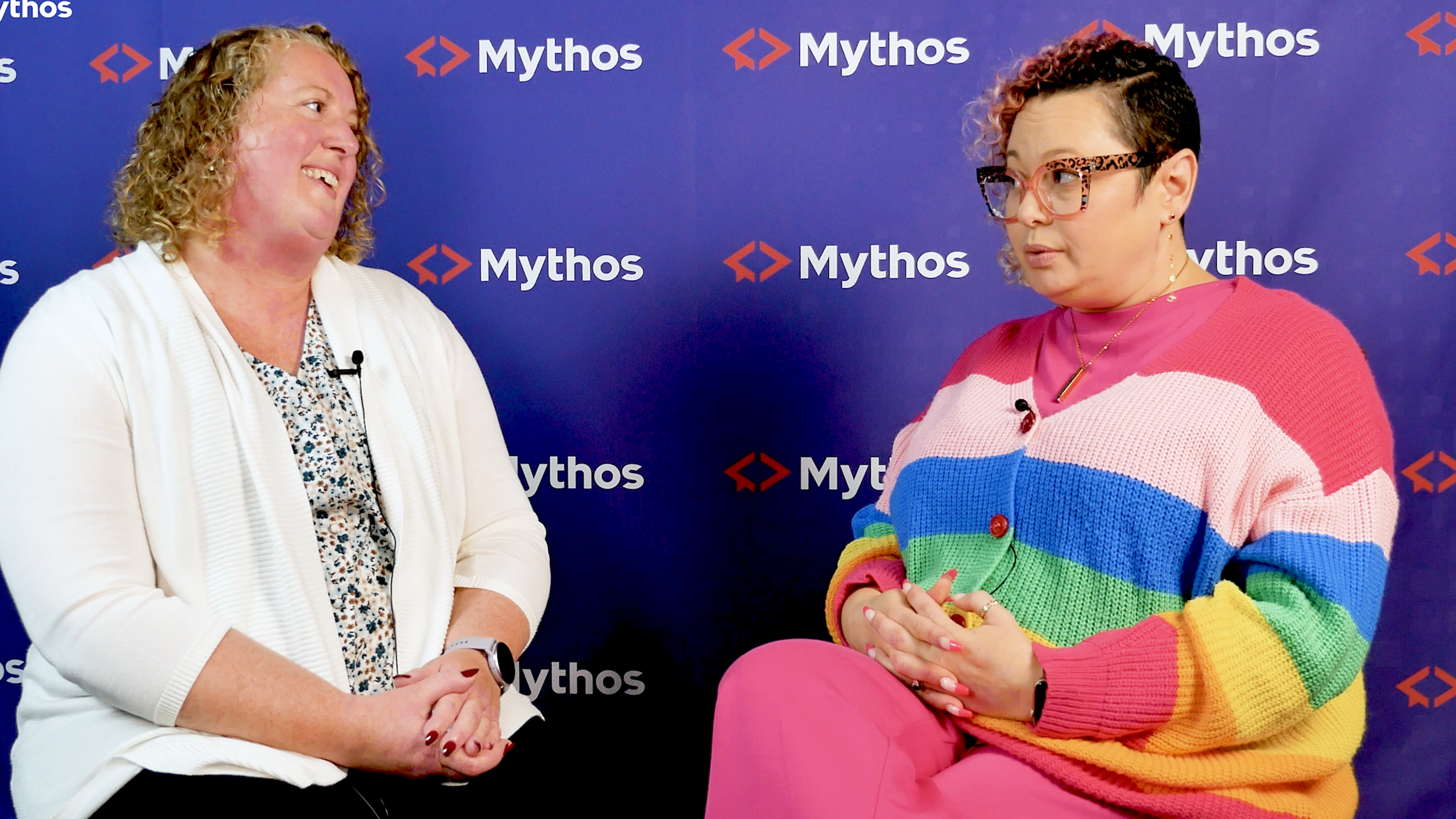
It was about the Bucknel team's willingness to tackle their complex reporting needs head-on and completely transform how their stewardship team operates. Sara Moise, Mythos Chief Stewardship Advocate, sat down with Amber recently to talk shop about all things donor relations and how Mythos gave the Bucknell team the tools they needed to completely reimagine—and revolutionize—their workflow.
Amber brought her teacher's brain to stewardship reporting
Before Mythos, Bucknell's reporting process was overly manual, complex, and time-consuming. Amber brought something valuable to the challenge: a teacher's creative mindset.
As she transitioned out of teaching, she was looking for careers with a creative outlet when she discovered stewardship. She loved that she could talk about the impact of donors' gifts and use tools to paint a picture where donors could see their true impact.
That creative vision met systematic execution in Mythos. Amber learned to look at a report and understand what's missing. She figured out how data setup drives formula-based automation. She connected her teaching background to the storytelling needs of donor stewardship.
By setting up their data correctly, the Bucknell team built workflows and conditional logic that automated decision-making within reports.
“The system makes decisions for you,” Sara and Amber celebrate in the conversation.
Their shift from manual work to strategic capacity
By automating repetitive processes, Bucknell's stewardship team freed up staff time and energy to focus on other stewardship initiatives they wanted to work on.
In higher ed, everyone's trying to figure out ways to do more with less. Mythos fit directly into that reality for Bucknell. With the right variables and data setup, they are able to build stronger donor communications without taking all of their staff's time and energy. Mythos was like adding another team member.
And their reports evolved beyond more generic communications into personalized, engaging online donor experiences. Amber said that ten years ago, her job was figuring out ways to make several donors feel special and important. Now, with the Mythos Platform, she has all the tools she and her team need to do that at scale—for hundreds, if not thousands of donors, each taken care of individually and authentically.
A tiered approach to stewarding donors individually
Modern donors at every philanthropic level want to understand the impact of their giving. But how do you deliver communications at scale that achieve that without drowning your team in manual processes?
Bucknell uses Mythos to tier their donor stewardship so they can focus on all their donors in a manageable way. They segment by donor level and engage each segment with tailored and thoughtful communications that keep them engaged.
Before Mythos, this level of segmentation simply was not possible.
They turned their marketing communications team into self-serve collaborators
Before Mythos, the Bucknell team was working in silos. Sharing anything with fundraisers or communications was hard. They'd have to send people to their database and then answer many questions just to help them find information.
Now? They add fundraisers as collaborators within Mythos so they can see everything being sent to donors. Analytics become shared resources that inform next steps and communications with individual donors. No more interrupting workflows, just real time collaboration.
Their marketing communications team became self-serve users by searching tagged communications and impact content themselves. Instead of constantly requesting student quotes or faculty stories from the stewardship team, they now access what they need when they need it. They even work together on crafting messaging and content.
Amber said if anyone's trying to look for information and going about it the wrong way, they pull them in right away and work it out. That intentional collaboration happens because Mythos supports partnership and collaboration instead of creating barriers.
They're planning creative anniversary celebrations in Mythos
As they approach the anniversary of one of their buildings, they're using Mythos to honor founding donors while highlighting student stories and faculty members using the space. What makes building unique is its connection to art and art history, demonstrating to donors that their dollars impact students' whole lives and faculty members across the spectrum.
Amber said their donors want to see the true impact on students, and Mythos gives them tools to share those impact stories in compelling ways.
What makes a Mythos super user in less than a year?
Bucknell's journey to super user status came down to a few things:
- Clarity about their goals
- Willingness to learn the system deeply from the start
- Great support from the Mythos team
At Bucknell, that shift happened in less than one year. They dove into advanced features, solved complex reporting challenges, broke down silos, and freed up time for the stewardship work that matters.
Hear more about Bucknell's first year with Mythos in this case study.