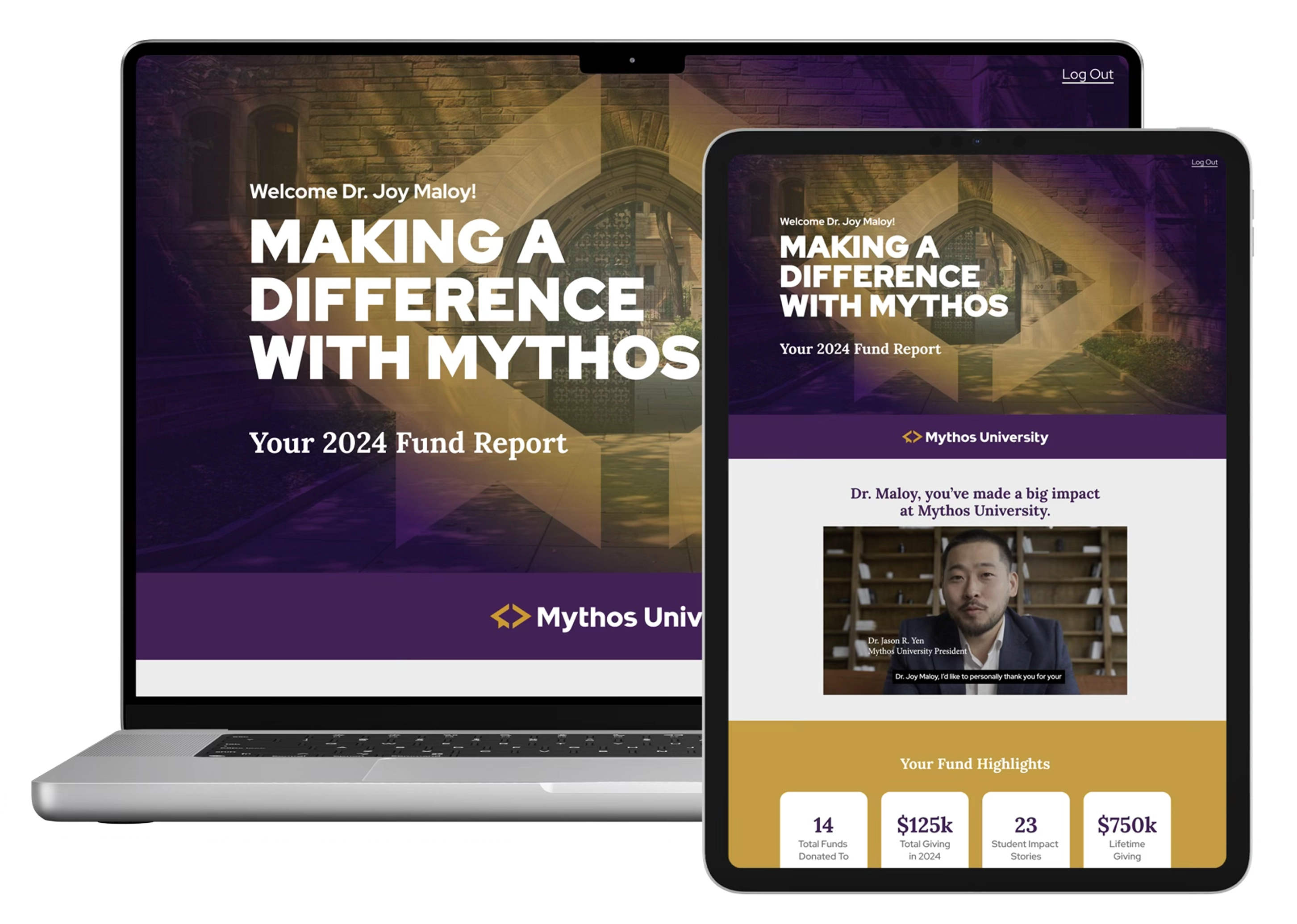
Your donors expect what Amazon already delivers. Personalized and relevant content based on their philanthropic interests, their giving history, and their specific preferences. Not generic communications sent to everyone at the same giving level.
But how do you actually build that capability? Do you need a dedicated role, or can you deliver bespoke donor communications within your current structure?
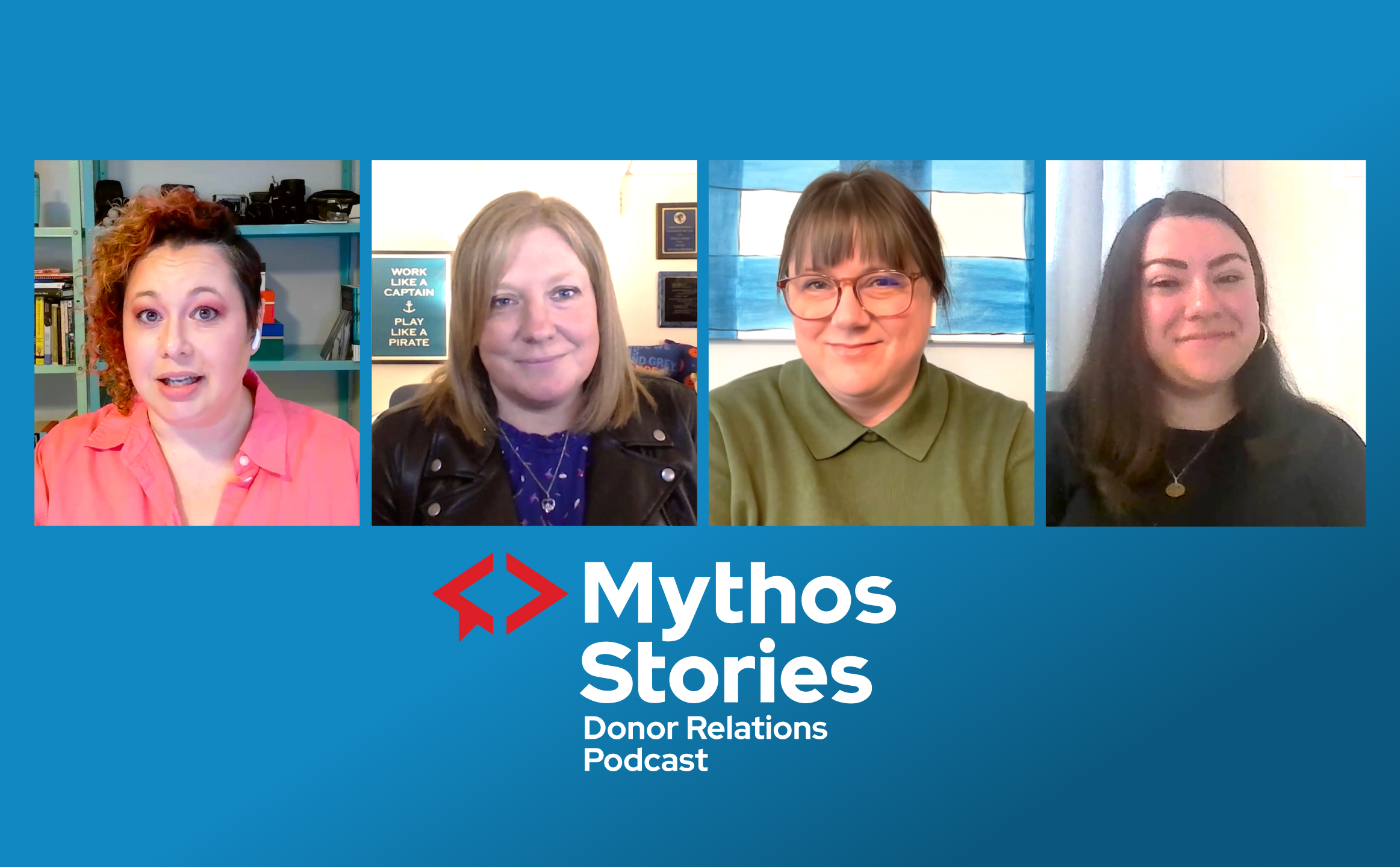
Sarah Villien, Program Manager at Tulane University, Amanda Feser, Director of Creative Impact at the University of Nebraska Foundation, and Cheryl McCloskey, Director of Stewardship at Seton Hall University, sat down with Sara Moise, Chief Stewardship Advocate at Mythos, to discuss how they're making highly customized donor experiences happen. Their approaches differ. Their organizational structures vary. But they're all working toward the same goal: systematic, personalized donor communications at scale.
Whether you're advocating for a new position or figuring out how to deliver this work with your current team, this conversation maps the territory.
Watch the full conversation to hear Sara, Amanda, Cheryl and Sarah discuss their favorite projects, documentation strategies, and specific advice for institutions building these programs from scratch.
Donors Now Expect What Amazon Already Delivers
The expectations have fundamentally shifted. Donors engage with the world outside the institutions they support, where companies like Amazon deliver personalized content based on individual preferences and behavior. That same donor sits in your portfolio and now expects the same level of customization from their philanthropic relationships.
Sara pointed to a critical gap that institutions are finally addressing: "These donors have had access to impact information very directly, but not in any systematized way. Not in a way we're cataloging in our databases. It's been very haphazard."
Creating a dedicated role pulls everything together. It documents interactions, adds polish and consistency, ensures donors are connected directly to their impact. The transformation is possible. What would previously happen sporadically across disconnected touchpoints now flows through one strategic position with a holistic perspective.
And the timing for this need is meaningful. As authentic, human-generated content becomes more valuable in an increasingly AI-saturated world, the appetite for authentic, one-to-one communication is only growing stronger.
The ROI Is Elusive, But the Value Is Clear
When Cheryl asked about strategies for justifying these roles to leadership, the group acknowledged the challenge head-on. There's no clean ROI. You can't pull out data showing specific returns as a result of bespoke donor communications at comparable institutions.
But the strategic potential is undeniable.
Amanda emphasized the collaborative positioning: "This role has a broad view to make sure everybody's got the information they need and provide a seamless and exceptional donor experience. It's uniquely positioned to break down silos across advancement."
These positions take work off frontline fundraisers' plates, freeing them to focus on relationship-building instead of content creation. They create a holistic view of donor communication that prevents missteps and missed opportunities. They enable gift officers to stay on the road instead of sitting at their desks in design software or writing content.
The case builds itself once you document what's already happening informally across your team.
It's Not Just Creative Work. It's Strategic Orchestration.
These roles demand constant prioritization across relationship management, deliverable creation, strategic planning, and internal coordination. The panel highlighted the significant time spent on approvals and navigating institutional processes. Not the glamorous side of the work, but essential for maintaining quality and consistency.
The work requires real flexibility. When national headlines affect campus communications, bespoke outreach and engagement plans might have to pivot overnight. Amanda described needing to pause scheduled donor communications when institutional messaging takes priority, then recalibrating timelines and managing stakeholder expectations across multiple projects simultaneously.
Beyond tactical execution, these professionals maintain relationships across campus. Not just having their finger on the pulse, but knowing who has their finger on the pulse. That network becomes critical for gathering authentic content, accessing the right faculty or students, and understanding what's happening across the institution before it affects donor communications.
The Skills That Actually Matter
Beyond creative capabilities and communication expertise, Sara highlighted core professional competencies that make these roles successful: project management, organization, problem-solving, attention to detail, and confidentiality.
One skill is essential: treating your own colleagues the way you'd treat donors. Recognizing their contributions, showing appreciation, building genuine relationships across departments. As the group emphasized, "Don't forget the little guys. All your partners across campus."
That internal relationship-building pays dividends when you need quick turnaround on a donor video, when you're hunting down impact metrics at the last minute, when institutional priorities suddenly shift and you need partners who trust you enough to help you pivot.
Philanthropic Level Isn't the Only Filter
The decision isn't purely based on giving amounts. Sarah, embedded in Tulane's principal gifts team, works with a massive portfolio across three full-time fundraisers. Her approach focuses less on a static donor segment and more on specific moments in time. Projects or experiences that warrant highly customized communication to certain donor types.
Amanda echoed this project-based approach, working with frontline fundraisers to identify opportunities where bespoke stewardship creates meaningful impact rather than applying a blanket formula across top donors.
The question shifts from "who deserves this treatment" to "what moments deserve this level of customization."
Success Looks Different Than Traditional Metrics
The metrics for bespoke donor communications and stewardship success diverge from traditional advancement KPIs. Sara and Amanda pointed to relationship evolution indicators. Deepening engagement, increased donor responsiveness, requests for more involvement. The qualitative shifts that signal donors feel genuinely connected to their impact.
One tangible metric emerged that institutions can track immediately: the growing number of internal requests for custom stewardship support each year.
That demand signals both the need for and value of these dedicated positions. When gift officers start requesting more custom deliverables, when marketing communications teams want to collaborate on donor-specific content, when leadership asks for bespoke recognition experiences, the role is proving its worth.