University of Rochester
From 70-hour weeks to sustainable stewardship
“I used to work 70 hours a week. Now I don't because of Mythos.” That's what Andrea Meyer said after her first year with Mythos—and she's not exaggerating.
University of Rochester's stewardship team was trapped in an unsustainable cycle. Manual data transfers from SurveyMonkey to Excel to reporting software created error-prone workflows that consumed entire weeks. The reports themselves fell flat with donors, and the workload left no capacity for the strategic relationship-building that actually moves donors.
Andrea and her team transformed more than their processes with Mythos—they transformed their professional lives. Today, they work reasonable hours while producing reports that donors actually engage with, contact the team about, and remember.
That time they've gained?
It's fueling an entirely new touchpoint program that gives gift officers meaningful reasons to connect with donors.
Before Mythos
After Mythos
From manual organizing to systematic processes
When University of Rochester's stewardship team evaluated their reporting process, they discovered a critical bottleneck. The manual workflow created a tedious and error-prone process that left little time for strategic stewardship work.
In addition to the amount of work needed, Andrea wasn't happy with the reports they were able to make manually. “The reports themselves were so flat, and they just did not resonate anywhere near with our donors like our current ones do through Mythos.”
The previous system University of Rochester used created significant limitations. Survey responses had to be manually exported, edited in Excel, and then transferred into reporting software, as Diane Crane, formerly the Director, Advancement Communications at University of Rochester, explained about the manual data process.
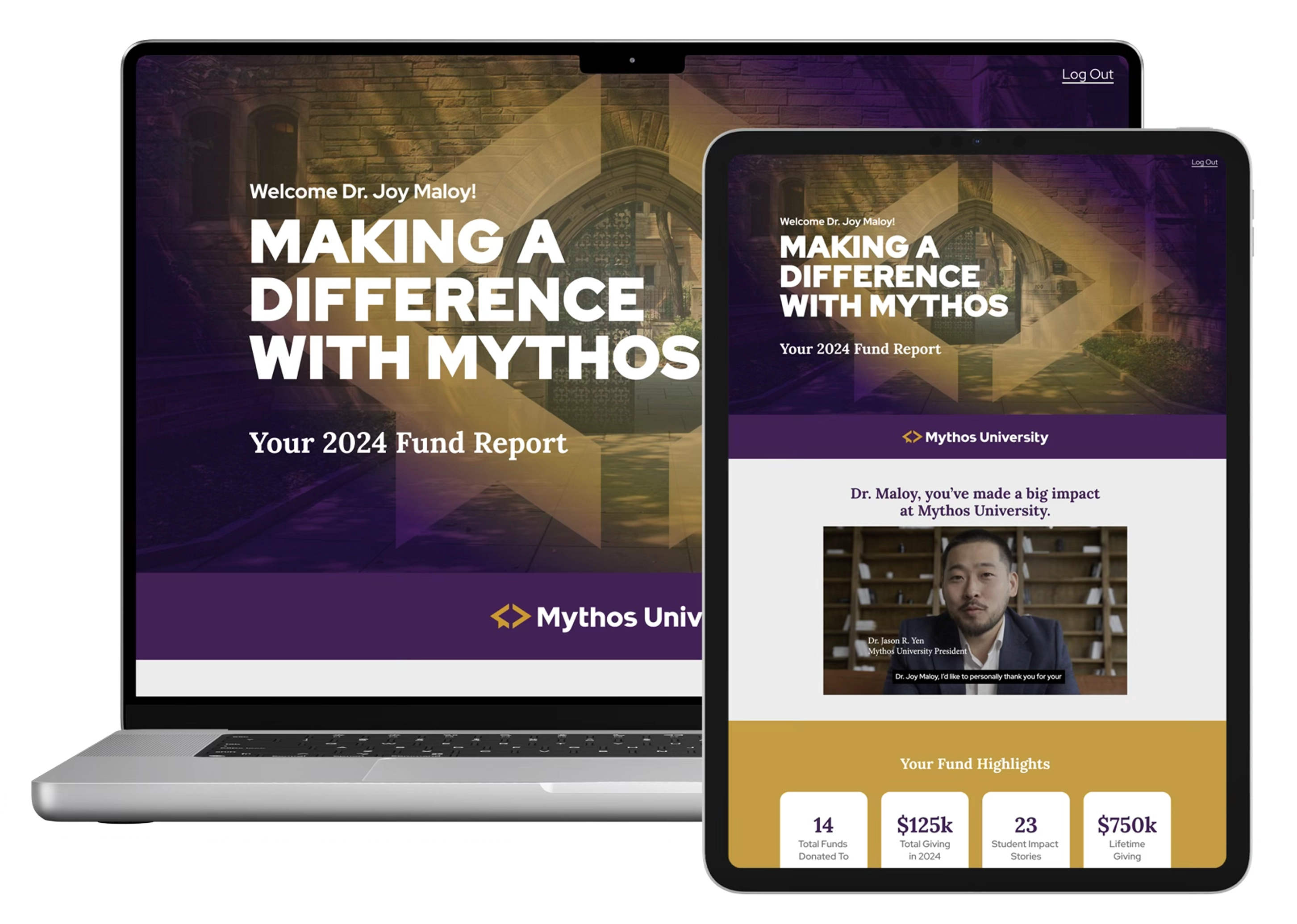
With Mythos, University of Rochester gained the ability to send polished surveys directly to students with strategically designed questions. The platform's flexibility allowed them to ask questions that create genuine connections between donors and students, such as “Is there anything you would like to ask your donor?”
This thoughtful approach meant students weren't simply being asked to thank donors—they were given opportunities to share their university experience and interact meaningfully with the people supporting their education.
The impact extended beyond efficiency. University of Rochester can now offer donors the option to share their email addresses with students, indicate interest in video contact, and create personalized touch points that respect privacy preferences.
The possibilities that Mythos made possible
Through implementing Mythos, University of Rochester transformed their stewardship approach from reactive to strategic. The time savings and workflow improvements created capacity for entirely new programs and initiatives:
Enhanced donor personalization: The team can now tier donors into different categories, with some receiving more detailed information than others. They have complete control over reporting cycles and can prioritize different donor segments—like getting reports to trustees first, an ability they never had before.
Visual storytelling that resonates: Presentation quality became a game changer. The team now includes variable print photos showing not just scholarship recipients but also relevant faculty and researchers. These personalized images have become so important that donors actually contact the team to say "Hey, that's not my recipient" or "I know that doctor"—proof that reports have become genuinely personal to donors.
Student engagement and information sharing: The system enabled University of Rochester to provide students with information about their scholarships and donors—something they couldn't do before. Students now learn about the history of their scholarship and can discover more about the donors supporting them.
Strategic gift officer partnerships: With more time available, the stewardship team has expanded their touchpoint program, providing gift officers with meaningful reasons to contact donors. This includes tracking report opens and following up when donors engage with their reports.
“We can go back to the gift officers and say, hey, your donor opened the report. Would you like to follow up with them? And they do. They want to take these opportunities to have another touchpoint with their portfolios,” Andrea said when talking about the Mythos workflow.
A partnership focused on continuous improvement
Over seven years of working with Mythos, University of Rochester has experienced consistent support and responsiveness. The Mythos team has proven willing to make improvements and adjustments to help streamline workflows—not just for the stewardship team, but for their colleagues across advancement.
“Going back to our old system would feel like going back to pen and paper. Mythos has been an automation game changer for our department.”