Brown University:
Creating capacity for strategic stewardship
“We have completely changed the makeup of the team and how it functions. We used to be writers buried in manual tasks. Now we’re project managers using intelligent systems to scale strategic stewardship.”
Brown University’s stewardship team was drowning in manual work. Every year, thousands of donor reports needed manual organizing, editing across multiple software programs, and painstaking proofing. It wasn’t just inefficient—it was preventing them from doing more valuable stewardship work.
Katie LeClair, Director of Stewardship, completely transformed how her team functions, evolving from writers buried in manual tasks to project managers using intelligent systems in Mythos to scale their work and create space for strategic stewardship.
Before Mythos
After Mythos
From manual organizing to systematic processes
“We have completely changed the makeup of the team and how it functions,” Katie explained. “The stewardship team used to be made up of mostly writers who took a lot of time physically organizing reports and completing ad hoc requests, and now we’re a team of project managers who use a digital system to do the organizing for us.”
Mythos replaced their manual workflows—templates created in one software, moved to another for editing, never quite polished. Mythos automated the manual work going between several tools, making it efficient and dramatically reducing manual proofing.
Printing reports with Mythos instead of using an outside vendor “was a relief,” Katie noted, cutting out the middleman work of handing off data to someone unfamiliar with their process.
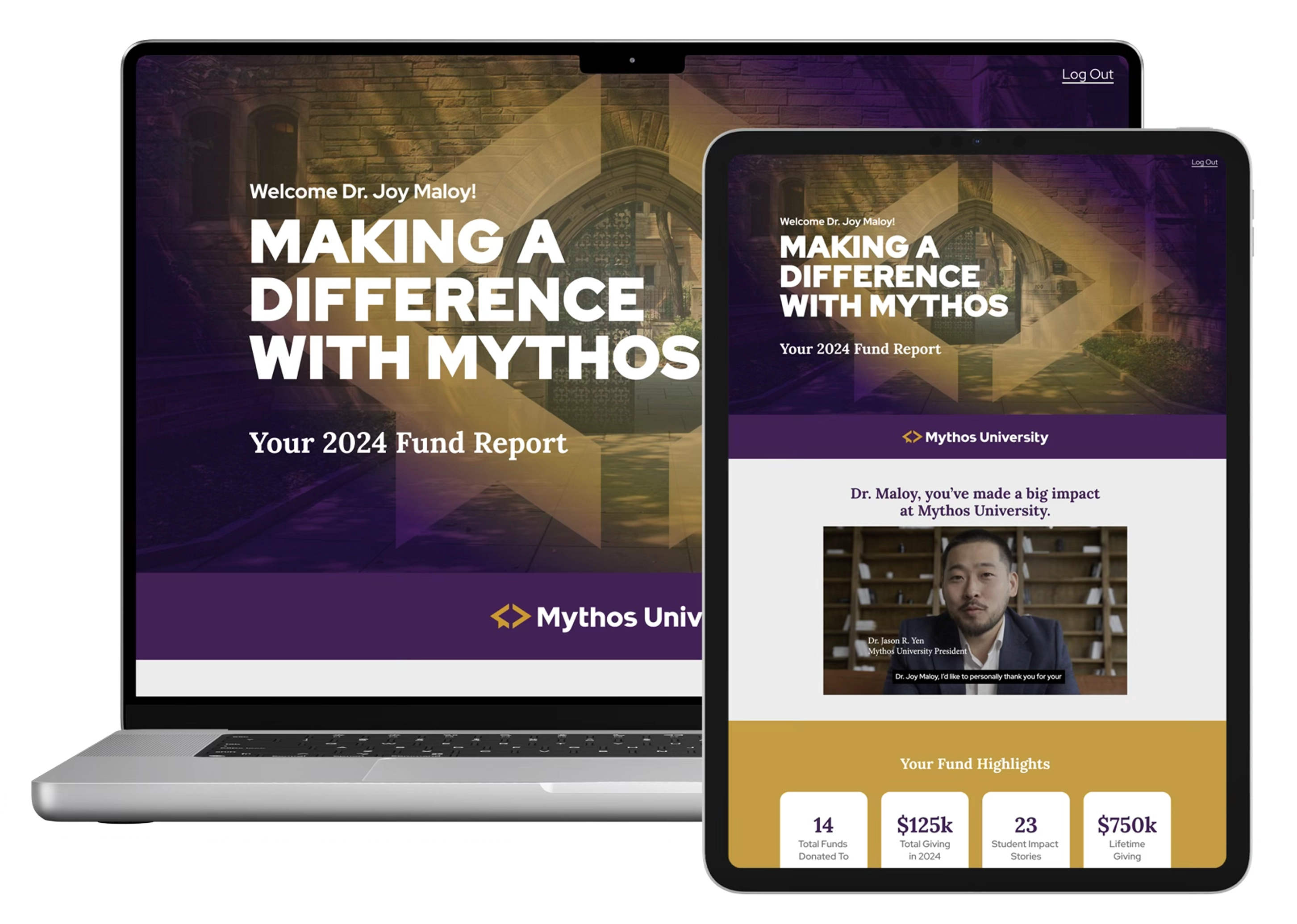
The impact went beyond efficiency. One donor was so impressed with her report that she called Katie personally—not to discuss her gift, but to ask if they could mail a copy to her brother. “These are the best reports we have ever received,” she said. That’s when Katie knew they’d created something special.
But eliminating busywork was just the beginning. The real transformation happened when Katie’s team finally had time to think strategically.

Building capacity for strategic stewardship
The even bigger story is what they did with that capacity—establishing an individual stewardship program for their most engaged donors, using data to drive personalization, and engaging campus partners to create higher quality impact stories.
“When fundraisers trust that there is this consistent, repeated process taking care of stewardship basics, then they can look beyond reporting and think more creatively.” she explained.
With the time savings, her team built partnerships across advancement, creating resources for marketing communications, and preparing for a major campaign with donors.
Katie’s advice to other advancement teams? “You can’t think strategically when you’re buried in busywork. Find the tools that eliminate the manual work, and then use that capacity to actually steward your donors.”
At Brown, that shift from reactive to strategic has transformed not just reports, but relationships. The donor who called to request a copy for her brother wasn't responding to efficient workflows or automated systems—she was responding to a beautiful, thoughtful communication that made her feel truly valued. But that report only happened because Katie's team had the capacity to make it exceptional.
Today, Brown's stewardship team operates as project managers orchestrating intelligent systems rather than writers buried in manual tasks. They've established individual stewardship programs for top donors, built partnerships across advancement, and created the consistent processes that allow fundraisers to think more creatively about donor relationships.
The technology handles thousands of reports. The humans focus on the donor who calls to say “these are the best reports we have ever received.”
That's the shift from reactive to strategic, and it's exactly what stewardship should be about.